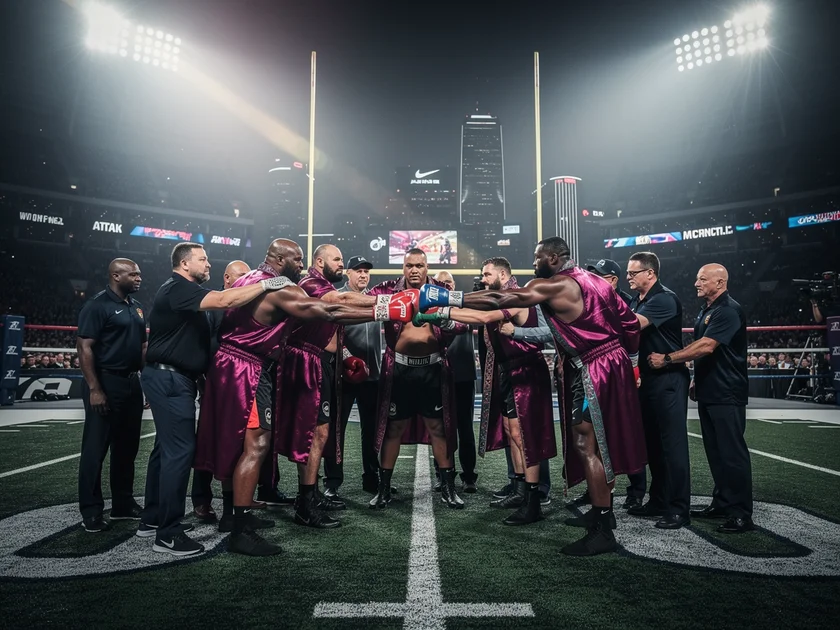
The UFC Heavyweight Division enters April 2026 at a crossroads, with prospect activity across multiple weight classes forcing the promotion to reassess its depth chart at the top of the pound-for-pound ladder. Saturday’s UFC Fight Night: Moicano vs. Duncan card underscored how quickly momentum can shift when raw talent collides with uneven competition. The heavyweight picture, never static for long, now competes for promotional attention with breakout performances elsewhere on the roster.
Breaking down the advanced metrics from Saturday’s card, the most instructive storylines did not come from the main event alone. Several prospects delivered highlight-reel finishes that will echo through UFC matchmaking discussions for weeks, and the ripple effects reach all the way to the heavyweight rankings conversation.
What the UFC Fight Night Card Revealed About Divisional Depth
UFC Fight Night: Moicano vs. Duncan, held Saturday, produced a cluster of prospect performances that illustrated both the promise and the fragility of developing fighters across weight classes. The card’s secondary bouts drew as much analytical attention as the headliner, with finishes from Abdul Rakhman Yakhyaev, Ethyn Ewing, and Tommy McMillen generating immediate matchmaking buzz.
Abdul Rakhman Yakhyaev, the Turkish light heavyweight, drew particular notice. Bleacher Report described him as “one of the best prospects we’ve seen in the UFC light heavyweight division in years”. That kind of ceiling assessment matters beyond 205 pounds — when elite athletic profiles emerge at light heavyweight, they inevitably fuel speculation about future heavyweight transitions, a path well-worn by former champions and contenders throughout the sport’s history.
Tommy McMillen, a featherweight and training partner of former UFC bantamweight champion Sean O’Malley, also turned heads with a sharp finish. The O’Malley connection gives McMillen an immediate promotional hook, though the numbers suggest his development arc carries real risk. His striking defense contains, by Bleacher Report’s assessment, “gaping holes” that higher-level opposition will exploit if left unaddressed. Raw finishing ability without technical refinement is a formula that produces exciting early highlight reels and abrupt career plateaus.
UFC Heavyweight Division Context: Where the Weight Class Stands
The UFC Heavyweight Division currently operates in a familiar pattern: a thin elite tier, a volatile middle class of contenders, and a deep pool of physical specimens whose fight IQ and submission defense remain untested at the highest level. Jon Jones holds the heavyweight title, and the division’s contender picture — featuring names like Ciryl Gane, Tom Aspinall, and Stipe Miocic — has been shaped by injury timelines and promotional scheduling as much as by octagon performance.
Tracking this trend over three seasons, the heavyweight division‘s most persistent structural problem is the gap between physical tools and technical execution. Fighters with elite reach advantages and knockout power routinely stall out against opponents with superior takedown defense and ground control time. The film shows that heavyweights who combine a credible submission threat with disciplined octagon control — think Gane’s distance management or Aspinall’s grappling base — consistently outperform pure punchers over a full camp cycle.
Saturday’s card did not feature a heavyweight main event, but the broader prospect pipeline discussion is directly relevant. When promoters scout the next generation of 265-pound contenders, they frequently pull from the light heavyweight and super heavyweight amateur ranks — exactly the pool that Yakhyaev’s performance now enters. A fighter with his athletic profile, if he fills out physically, becomes a legitimate future heavyweight asset within a two-to-three-year development window.
Key Developments From UFC Fight Night: Moicano vs. Duncan
- Abdul Rakhman Yakhyaev delivered a highlight-reel finish and was singled out as among the most impressive light heavyweight prospects the UFC has showcased in recent years.
- Featherweight Ethyn Ewing also produced a notable finish on Saturday’s card, adding to a trio of prospect performances that dominated post-fight discussion.
- Tommy McMillen trains alongside Sean O’Malley, the former UFC bantamweight champion, giving the featherweight prospect direct access to an elite competitive environment.
- Bleacher Report noted McMillen has been “extremely inconsistent” over his last 10 fights, alternating wins and losses while performing well primarily against lower and mid-level competition.
- The card’s headliner, Renato Moicano vs. Duncan, served as the nominal main event, but the undercard finishes generated the sharpest post-fight analytical attention.
Does Prospect Activity Below Heavyweight Signal a Deeper Roster Problem?
The honest answer, based on available data, is yes — with an important caveat. Prospect breakouts at featherweight and light heavyweight are not inherently a problem for the heavyweight division. They are, however, a signal of where UFC matchmaking energy is flowing. When the promotion’s most buzzworthy developmental talent clusters below 205 pounds, the 265-pound weight class risks becoming a static rankings environment where the same five names cycle through title contention without meaningful new blood entering the picture.
One counterargument worth considering: the UFC Heavyweight Division has historically been cyclical rather than continuously deep. The division produced a generational run of competitive title fights between 2018 and 2022, and the current quieter period may simply reflect a natural reset rather than structural decline. Aspinall’s emergence as an interim champion and his pending unification situation with Jones represents the most compelling heavyweight storyline available — and that fight, whenever it materializes, will refocus divisional attention immediately.
The numbers reveal a pattern in UFC promotional cycles: divisions tend to heat up rapidly when one or two marquee matchups crystallize. The heavyweight weight class is one significant booking away from reclaiming its traditional status as the UFC’s flagship division. Saturday’s card, dominated by lighter-class prospects, is a reminder of how much the 265-pound tier depends on its top names staying healthy and active.
McMillen’s case offers an instructive parallel for evaluating any prospect pipeline. Finishing ability at the developmental level is necessary but insufficient. The UFC‘s heavyweight contender history is littered with physically imposing fighters — strong chins, heavy hands, legitimate power shots — who never developed the fight IQ to manage distance, defend takedowns consistently, or execute a coherent game plan under pressure from elite opposition. The sport rewards technical completeness, not just raw tools.