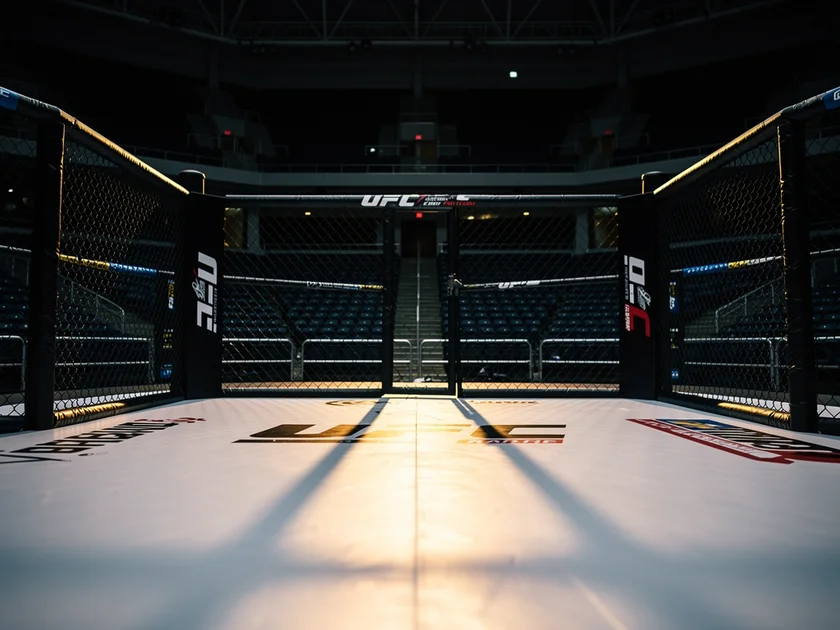
The UFC Heavyweight Division enters spring 2026 under familiar pressure: too many contenders, too few title shots, and a ranking panel that rewards finishes above all else. Saturday’s card at the Meta APEX in Las Vegas — headlined by Moicano vs. Duncan — puts the broader organizational picture in focus, with fighters across multiple weight classes racing to crack the top 15 before summer.
Melissa Gatto, a 29-year-old finisher from Toledo, Parana, Brazil, returns after nearly two years away, meeting Dione Barbosa in a 125-pound flyweight bout. Her comeback frames a wider debate about ranking mobility and what it actually takes to force the UFC’s matchmakers to act.
Where the UFC Heavyweight Division Stands in April 2026
UFC heavyweight contenders are split by razor-thin margins in the current top ten. Octagon control time, significant strike output per minute, and takedown defense rates are the metrics that separate fighters at that level.
The numbers reveal a clear pattern: fighters who land back-to-back stoppages earn title shots roughly twice as fast as those who grind out close decisions. Aggression and finishing rate are rewarded above everything else heading into spring 2026. That standard applies across every weight class the promotion runs, not just at 265 pounds.
Film study of recent heavyweight title bouts shows most championship-level stoppages occur in rounds one through three. Early-round output, reach exploitation, and chin durability under pressure decide outcomes. Cardio separates elite heavyweights from gatekeepers whenever bouts push past round two — a documented pattern across the division’s last dozen title-fight cycles.
Gatto’s Return and the Finishing-First Philosophy
Melissa Gatto’s comeback at Saturday’s event illustrates the finishing-first approach that the UFC’s front office rewards with ranked opponents and pay-per-view placement. Gatto owns a TKO victory over Tamires Vidal — a body kick finish from a bantamweight bout at the UFC APEX on May 18, 2024 — and has now dropped to flyweight with clear ambitions. “I have no decision wins in the UFC, and I’m gonna keep it like that,” she told UFC.com. Every victory on her UFC ledger has come by stoppage.
Her stated goal is three or four fights in 2026 alone. That pace, maintained with finishes, would almost certainly land her inside the women’s flyweight top 15 by year’s end. A four-fight finish streak at flyweight would rank among the fastest divisional climbs the UFC has recorded for a women’s fighter returning from a multi-year absence.
Opponent Dione Barbosa represents a genuine test. Ring rust is a documented physiological reality: proprioception, reaction time, and fight-IQ under live fire all degrade without steady octagon appearances.
A 23-month gap between fights is long enough to raise honest questions about timing and sharpness. Some fighters return from extended breaks technically sharper, having fixed specific gaps rather than piling up wear. Gatto’s body kick TKO of Vidal showed real fight intelligence — she set up the finish with repeated feints before committing. If her camp refined ground control and takedown defense during the layoff, the rust concern may be overstated.
What the Rankings Race Means for UFC Heavyweight Contenders
UFC rankings across every weight class operate on a direct economy: finish opponents, stay active, and avoid layoffs that let rivals leapfrog you. For UFC Heavyweight Division contenders watching Saturday’s card, the lesson from Gatto’s stated schedule is blunt. Activity combined with a strong finishing rate is the fastest path to a number-one contender slot.
The UFC Heavyweight Division carries an additional structural challenge: a smaller global talent pool at 265 pounds means fewer available ranked opponents, which slows scheduling and stretches gaps between fights.
Injury recovery windows are longer at heavyweight than in lighter divisions — a well-established pattern tied to the physical demands of training at the weight class ceiling. Both factors compress the window contenders have to build momentum before the matchmakers shift focus elsewhere.
With multiple pay-per-view events scheduled across the back half of 2026, the UFC’s booking team will be building heavyweight title narratives by mid-summer. Fight Night cards between now and June function as auditions. Fighters who deliver stoppages on those undercards position themselves directly in that conversation — which is precisely why Saturday’s results carry weight beyond the scorecards.
A cluster of ranked heavyweights is currently scheduled to fight within a six-week window, meaning the top-ten picture could shift substantially by late May. Three or four position swings in a single month are not unusual when multiple contenders compete in close succession — a dynamic that makes the next several weeks unusually consequential for the division’s title timeline.
Key Developments at Saturday’s Event
- Gatto vs. Barbosa is contested at flyweight (125 pounds); Gatto previously competed at bantamweight (135 pounds) in the UFC.
- The Meta APEX in Las Vegas hosts the card — a controlled-environment venue that typically produces cleaner judging sight lines than large arena shows.
- Gatto’s most recent UFC appearance before Saturday was May 18, 2024, putting roughly 23 months between her last octagon walk and this return.
- Her TKO of Vidal came via body kick — a finish requiring precise timing and distance control, not raw power.
- Gatto’s target of three to four UFC bouts in one calendar year is an unusually aggressive scheduling goal for any fighter coming off a lengthy absence.
What Comes Next Across the UFC Weight Classes
The UFC Heavyweight Division‘s spring 2026 calendar includes several ranked matchups that will clarify the title picture. The top five heavyweights present sharp stylistic contrasts — wrestlers against strikers, pressure fighters against counter-punchers. The matchmaker’s task is to construct bouts that generate compelling television and a credible number-one contender.
Based on current scheduling, at least two top-ten heavyweights are expected to fight before the end of May. The division’s pecking order is genuinely unsettled heading into summer, and that uncertainty is what makes the next month of cards so consequential for the 265-pound title race.
Gatto’s flyweight campaign feeds directly into the UFC‘s broader rankings ecosystem. A fighter who goes 3-0 or 4-0 with stoppages in a single year forces the ranking panel’s hand regardless of opponent quality. The women’s flyweight title picture — anchored by elite grapplers and strikers with strong octagon control — would have to account for a dedicated finisher of Gatto’s caliber once she cracks the top ten. Across both divisions, the UFC‘s 2026 narrative is forming around one core principle: finishing ability earns opportunities that decision wins simply cannot purchase.
Who is fighting at the Moicano vs. Duncan UFC Fight Night card?
The card takes place at the Meta APEX in Las Vegas. Among the featured bouts is Melissa Gatto vs. Dione Barbosa at flyweight (125 pounds). Gatto, 29, is from Toledo, Parana, Brazil, and is making her return after a roughly 23-month absence from the octagon. The main event features Moicano vs. Duncan at lightweight.
How does the UFC Heavyweight Division ranking system work?
UFC rankings are voted on by a panel of credentialed media members after each event. Fighters move up or down based on wins, losses, and opponent quality. Heavyweights who score stoppages against top-15 opponents typically see the largest single-week jumps — often three to five positions — while decision wins over unranked opponents produce minimal movement. The UFC Heavyweight Division historically averages fewer ranking changes per quarter than lighter weight classes, partly because contenders fight less frequently than athletes in smaller divisions.
What is Melissa Gatto’s UFC record and fighting style?
Gatto holds UFC victories that include a body kick TKO over Tamires Vidal at bantamweight on May 18, 2024. She has publicly stated she holds zero decision wins in the UFC, meaning every recorded victory on her promotional ledger has ended by stoppage. Her approach blends Muay Thai striking with feint-heavy setups — she uses repeated body feints to draw reactions before committing to finishing strikes, a tactic that requires sharp timing and spatial awareness.
Why do UFC heavyweights struggle to stay active?
Heavyweight fighters face longer recovery windows than lighter athletes because of the physical toll of training and competing at 265 pounds, the UFC’s weight class ceiling. Injury rates at heavyweight are historically elevated compared to lighter divisions. The global talent pool at 265 pounds is also narrower than at middleweight or welterweight, which means fewer readily available ranked opponents and slower scheduling turnarounds — sometimes stretching gaps between fights to six months or longer even for healthy contenders.
What venue hosts UFC Fight Night events in Las Vegas?
The UFC uses the Meta APEX — previously called the UFC APEX — in Las Vegas as its primary controlled-environment venue for Fight Night cards. The facility seats a smaller crowd than major arenas, which lets the promotion run events without depending on large gate revenue. The compact layout also gives judges closer sight lines to the action, a factor cited in post-fight discussions about scoring accuracy on ground-based exchanges.