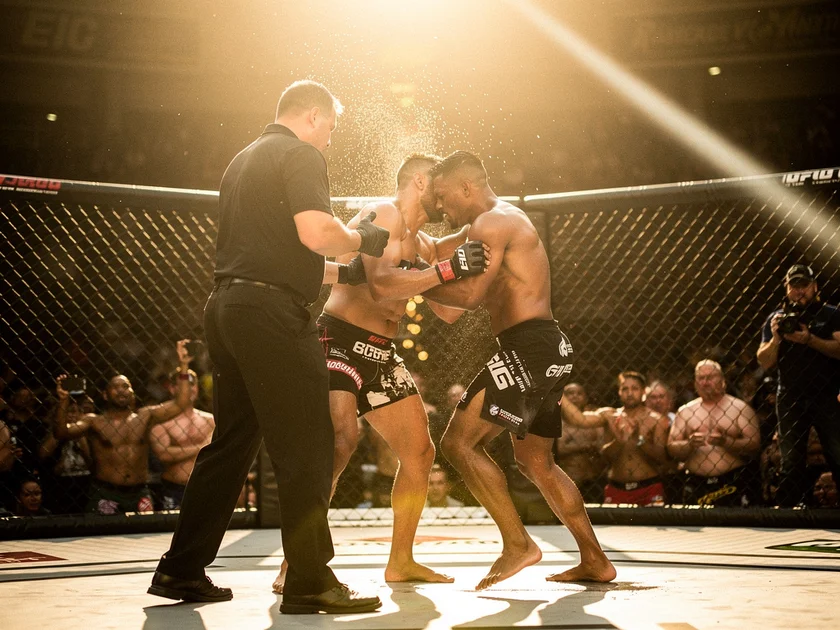
UFC drug testing USADA protocols remain the backbone of competitive integrity across every weight class as of March 2026. The anti-doping framework determines who steps into the octagon clean and who faces suspension — a distinction that directly shapes title contention, rankings movement, and pay-per-view main events.
UFC Seattle, scheduled for March 29, 2026, puts the testing setup back in focus. Fight week interviews confirm a full card of athletes who cleared all pre-fight screening requirements. Among those cleared: Israel Adesanya, Alexa Grasso, Maycee Barber, Joe Pyfer, Chase Hooper, Bruna Brasil, and Navajo Stirling — each completing mandatory testing windows before stepping on the scale.
How UFC Drug Testing USADA Works in 2026
The UFC anti-doping program requires fighters to submit to both in-competition and out-of-competition testing. Samples are checked against the World Anti-Doping Agency code. Violations trigger review periods that can sideline athletes for months or years. The UFC transitioned away from exclusive USADA oversight in late 2023, adding VADA oversight while keeping certain USADA-aligned protocols for international compliance.
UFC drug testing USADA standards apply across all weight classes, from flyweight to heavyweight. A single positive test in a top-five ranked slot can delay a title shot by 18 months or more, reshuffling the entire challenger queue. The women’s strawweight and flyweight divisions — where Alexa Grasso competes — have seen this pattern play out over the past three years. Testing violations removed would-be contenders and sped up the careers of clean athletes who held their ranking positions.
UFC Seattle’s fight week roster, confirmed through official UFC.com interview releases, shows every featured athlete completing standard pre-event media availability after final testing clearance. That sequence — test, clear, interview, weigh-in — is the operational rhythm the promotion uses to signal compliance to athletic commissions and the public.
Key Fighters Cleared for UFC Seattle
Israel Adesanya, the former middleweight champion with multiple title defenses on his record, completed his fight week interview obligations in Seattle, confirming his clearance through the testing program. Adesanya has competed under the UFC anti-doping USADA framework throughout his championship run, making his compliance record one of the more scrutinized in the middleweight division. Alexa Grasso, the Mexican fighter who holds a landmark victory over Valentina Shevchenko, also passed through the pre-fight media cycle without incident. Both athletes compete in divisions where the anti-doping stakes run high given the global talent pool and ranking volatility.
Joe Pyfer and Chase Hooper represent the card’s younger talent layer. Both completed fight week interviews that signal full compliance. Pyfer is a middleweight with genuine knockout power built on a pressure-forward style. Hooper’s submission-based ground game has made him one of the more technically interesting lightweights on the roster. Their opponents’ testing records are also part of the pre-fight vetting every commission reviews before issuing a license.
Maycee Barber and Bruna Brasil round out the confirmed cleared athletes. Brasil’s UFC Seattle appearance is part of a women’s division matchup that carries ranking implications. When full cards pass pre-fight screening without incident, the promotion benefits from a cleaner competitive story heading into broadcast — a commercial reality the UFC front office has long understood.
What a USADA Violation Actually Costs a UFC Fighter
A first-time violation under current UFC anti-doping policy typically carries a two-year suspension. Mitigating factors — contaminated supplements, therapeutic use exemptions, or cooperation with investigators — can reduce that window, sometimes to as few as six months depending on the substance. The financial toll compounds the competitive damage: fighters lose purse money, sponsorship contracts, and ranking position at the same time.
Fighters who serve full suspensions and return to the octagon face a steeper path than the raw record suggests. Opponents have sharpened their skills. Divisional hierarchies have reset. The physical toll of inactivity, combined with the weight of public scrutiny, produces a measurable performance dip in the first post-suspension bout for most athletes — a detail oddsmakers and sharp bettors have learned to price in. Over three recent seasons, that pattern has repeated often enough to be treated as a near-certainty rather than an exception.
Navajo Stirling, confirmed through fight week media at UFC Seattle, represents the newer generation of fighters who have operated entirely within the current testing setup. For that cohort, compliance is not a talking point. It is the baseline expectation built into every training camp, every weight cut, and every contract negotiation with the promotion.
UFC Seattle Card and the Broader Anti-Doping Picture
UFC Seattle’s confirmed fight week participants span multiple weight classes — lightweight through middleweight and across the women’s divisions — giving the March 29 card broad divisional reach. Seven athletes cleared through fight week media alone: Adesanya, Grasso, Barber, Brasil, Pyfer, Hooper, and Stirling. That number reflects a system processing hundreds of UFC fighters per year across a global schedule.
Critics of the UFC’s anti-doping setup have pointed out that the 2023 transition away from pure USADA oversight created gaps in the out-of-competition testing calendar, particularly for international fighters based outside North America. Those structural concerns have not been fully resolved. The current hybrid approach draws periodic scrutiny from clean-sport advocates who prefer the original independent model — a fair criticism that the promotion has yet to answer with hard data on international testing frequency.
What the UFC has built is a testing system that functions at scale, even if its independence from promotional interests invites debate. Clearing a full card like UFC Seattle — seven-plus confirmed athletes through fight week media alone — shows the day-to-day machinery works. Whether the architecture is truly independent is a separate, and harder, question.
Key Developments
- UFC Seattle’s fight week interview schedule was published March 28, 2026, listing seven athletes who completed pre-event media availability after testing clearance.
- Israel Adesanya’s Seattle appearance marks his return to the Pacific Northwest market, a venue the UFC has used to build its West Coast audience base.
- Bruna Brasil’s inclusion on the card represents a women’s division booking that carries ranking implications in a weight class currently reshuffling its top-five contenders.
- Navajo Stirling completed fight week interview obligations alongside established veterans, signaling the promotion’s confidence in the newer fighter’s compliance record.
- The UFC Seattle card features fighters from at least four distinct weight classes, making it one of the broader divisional cards on the 2026 schedule based on confirmed fight week participants.
What replaced USADA as the UFC’s anti-doping administrator?
The UFC moved away from its exclusive USADA partnership in late 2023, adding VADA oversight while keeping certain USADA-aligned protocols for international regulatory compliance. The shift drew criticism from clean-sport advocates who valued USADA’s independence from the promotion’s commercial interests. Some jurisdictions still require USADA-standard documentation for fighter licensing.
How long is a typical UFC anti-doping suspension in 2026?
A first-time violation carries a standard two-year suspension under current UFC anti-doping policy. Fighters who show mitigating factors — a contaminated supplement, a valid therapeutic use exemption, or active cooperation with investigators — may receive a reduced sanction, sometimes as short as six months depending on the substance and the fighter’s prior testing history.
Which UFC fighters were cleared for UFC Seattle in March 2026?
Seven fighters confirmed pre-fight testing clearance through official UFC fight week media at UFC Seattle: Israel Adesanya, Alexa Grasso, Maycee Barber, Joe Pyfer, Chase Hooper, Bruna Brasil, and Navajo Stirling, per UFC.com fight week interview releases dated March 28, 2026. The group spans at least four weight classes across the men’s and women’s divisions.
Does out-of-competition testing apply to all UFC fighters globally?
Out-of-competition testing is required for all UFC roster athletes, but coverage gaps for international fighters based outside North America have been flagged since the 2023 structural transition. Clean-sport organizations have identified these gaps as a weakness in the current hybrid model, particularly for athletes training in regions with limited testing infrastructure and fewer registered testing pools.
How does a UFC anti-doping suspension affect a fighter’s ranking?
Fighters serving anti-doping suspensions are removed from the UFC’s official rankings during the suspension period. Upon return, they re-enter the queue based on current divisional activity. A two-year absence can drop a former top-five contender outside the top 15 entirely, depending on how many ranked bouts took place in the weight class while they were suspended.