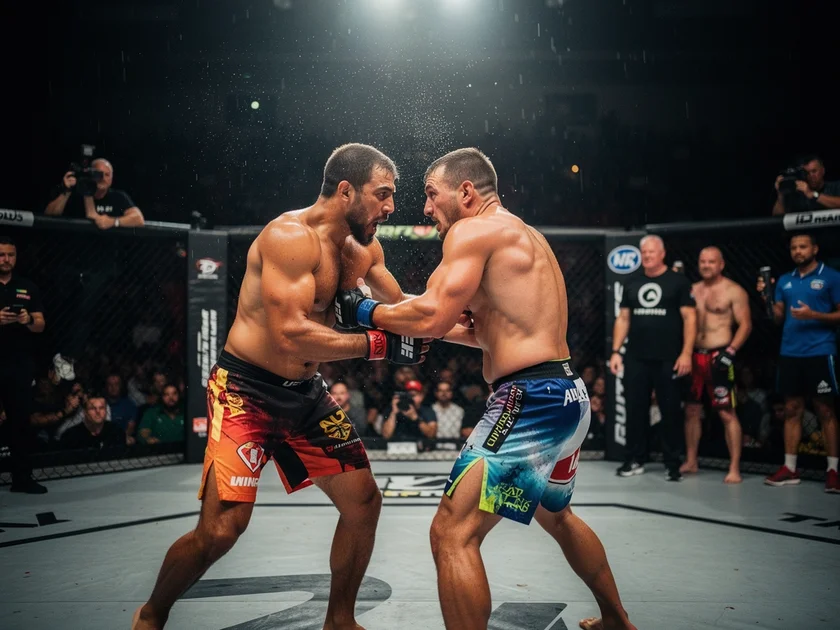
UFC drug testing USADA oversight defines the competitive integrity of every bout on the 2026 calendar, including the March 28 Fight Night headliner between former middleweight champion Israel Adesanya and hard-charging contender Joe Pyfer in Seattle. The UFC-USADA partnership has governed fighter testing since 2015, setting the framework for how athletes enter and exit the testing pool before any licensed bout.
With UFC Seattle on March 28, 2026, the anti-doping structure around high-profile Fight Night cards draws fresh attention. Adesanya, a two-time middleweight title holder who defended the belt five times, now enters on a three-fight slide. That stretch has put his career under a microscope.
How UFC Drug Testing USADA Protocols Work in 2026
Registered fighters must submit to both in-competition and out-of-competition testing. Athletes in the pool provide whereabouts data so collectors can conduct unannounced visits. First-time violations typically draw a two-year ban under World Anti-Doping Agency guidelines that USADA follows.
The UFC and USADA test across multiple substance categories: anabolic agents, peptide hormones, stimulants, diuretics, and in-competition narcotics. Blood and urine samples are collected. Split-sample procedures let fighters request a second specimen analysis at an accredited lab if an adverse finding is reported.
The process mirrors Olympic sport protocols. Mixed martial arts still lacks Olympic recognition, which makes the UFC’s voluntary adoption of this standard notable. Since the program launched in 2015, the active testing pool has included hundreds of fighters at any given time — a scale few professional sports leagues outside governing-body mandates have matched.
One counterargument worth examining: critics noted that the UFC’s shift from USADA to Drug Free Sport International (DFSI) for day-to-day test collection in 2023 created procedural uncertainty. USADA kept its role in adjudicating results, but the operational handoff raised questions among fighter advocates about continuity. The structural split between collection and adjudication remains a point of scrutiny for anti-doping specialists.
Adesanya, Pyfer, and Fighter Compliance at UFC Seattle
Israel Adesanya and Joe Pyfer are both active members of the UFC testing pool ahead of their March 28 middleweight clash in Seattle, Washington. Every fighter on a UFC card must clear the pre-fight testing window. An adverse analytical finding before an event can pull a bout from the card entirely — a logistical and financial hit the promotion works hard to avoid.
Adesanya’s career arc makes the Seattle fight compelling. After winning the interim middleweight title, unifying it, and defending five straight times, he enters on three consecutive losses. Joe Pyfer, described as an ascending American contender in UFC preview materials, represents the new generation pressing for rank in a weight class that has seen heavy turnover. Sean Strickland, Dricus du Plessis, and Robert Whittaker have all shaped the 185-pound division’s competitive picture in recent years.
Pyfer’s path through the middleweight ranks has been built on aggressive pressure and finishing ability. Those traits test a veteran’s chin and fight IQ under sustained output. Adesanya’s counter-striking and octagon control remain sharp tools, but three straight defeats raise fair questions about whether his timing and takedown defense have eroded enough to shift the stylistic math against a younger, hungrier opponent.
Does UFC Drug Testing USADA Cover All Fight Night Events?
UFC drug testing USADA adjudication applies to every sanctioned UFC event — Fight Night cards, PPV main cards, and preliminary bouts alike. No tiered coverage exists based on event size. A fighter on a regional Fight Night undercard faces the same testing rules as a pay-per-view headliner. That structural feature sets the UFC program apart from state athletic commission-only regimes, where oversight can vary by jurisdiction.
UFC Seattle marks the fifth time the promotion has held an event in the city. Climate Pledge Arena hosted UFC action on February 22, 2025, when Ricky Simon earned a knockout win over Javid Basharat in a bantamweight bout. Every fighter on that February card — and every fighter competing March 28 — falls under the same USADA-adjudicated anti-doping umbrella. The venue’s spot on the UFC calendar reflects both its capacity and the promotion’s confidence in the Pacific Northwest market.
What the Anti-Doping Framework Means for UFC’s Future Cards
The UFC’s anti-doping structure, with USADA handling results management and DFSI managing collections, will continue shaping fight card construction through the rest of 2026. Any suspension removes a fighter from the active roster. That directly affects matchmaking depth across all weight classes — flyweight through heavyweight — and can disrupt title timelines when top-ranked fighters are pulled from contention.
For the middleweight division, the Adesanya-Pyfer outcome carries ranking implications that feed directly into title contention math. Fighters who defeat former champions typically jump multiple spots in the official UFC rankings, which are voted on by a media panel. A Pyfer win would likely push him into the top five at 185 pounds. An Adesanya victory would re-open legitimate debate about a third title run. Either result lands under the same anti-doping certification covering every UFC bout.
The broader picture is direct: the UFC’s commitment to third-party anti-doping oversight, whatever its structural gaps, has become a fixed part of the promotion’s identity since 2015. Fighters, managers, and the front office brass all operate within that framework. High-visibility Fight Night events like the Seattle card give that framework its most public test — and its clearest proof of concept.
Key Developments in UFC Anti-Doping and the Seattle Card
- The UFC first partnered with USADA in July 2015, making it one of the earliest major North American pro sports properties to adopt an Olympic-standard anti-doping framework without a governing body mandate.
- Drug Free Sport International took over UFC collection operations from USADA in 2023, while USADA retained sole authority over results management and sanction adjudication — a division of duties with no direct precedent in major American sports.
- Joe Pyfer is identified as an ascending American contender in UFC fight preview materials, signaling the promotion’s confidence in his trajectory within the middleweight division.
- Ricky Simon’s knockout of Javid Basharat on February 22, 2025, at the Seattle arena was the venue’s most recent UFC bout before the March 28 card.
- Adesanya’s seven-year UFC run included two separate title reigns and five successful middleweight defenses before his current three-fight skid.
What is the UFC USADA drug testing program?
The UFC-USADA anti-doping program is a third-party testing system launched in July 2015. It subjects UFC fighters to both in-competition and out-of-competition testing. USADA handles results management and adjudication. Drug Free Sport International took over collection operations in 2023. The program follows WADA prohibited substance lists and tiered sanction guidelines, covering hundreds of active fighters at any given time.
How long is a UFC suspension for a failed drug test?
Under USADA-adjudicated UFC anti-doping rules, a first-time violation for a non-specified substance typically draws a two-year suspension aligned with WADA guidelines. Aggravating factors — such as tampering with the collection process — can extend a ban to four years. Contaminated supplement evidence, if verified, can reduce penalties below the standard two-year mark. Fighters bear the burden of proving any mitigating circumstance.
Is Israel Adesanya in the USADA testing pool for UFC Seattle?
Israel Adesanya, as an active UFC fighter scheduled to compete March 28, 2026, in Seattle, is required to be enrolled in the UFC’s anti-doping testing pool. All fighters on UFC cards must clear pre-fight protocols before being licensed, regardless of event type. Whereabouts compliance — providing location data for unannounced out-of-competition visits — is a mandatory condition of pool membership.
Has the Seattle arena hosted a UFC event before?
Yes. The arena hosted a UFC Fight Night on February 22, 2025, where bantamweight Ricky Simon knocked out Javid Basharat of Afghanistan. That card was the venue’s first UFC event. The March 28, 2026 card featuring Adesanya vs. Pyfer marks the second UFC event at the arena within 13 months and the fifth UFC event in Seattle overall.
What weight class is the Adesanya vs. Pyfer fight?
Israel Adesanya and Joe Pyfer compete at middleweight, the 185-pound division. Adesanya is a former two-time UFC middleweight champion with five title defenses. Pyfer is a rising American contender whose finishing ability has earned him a spot in the upper portion of the divisional rankings. The bout carries direct implications for top-five positioning at 185 pounds heading into the second half of 2026.