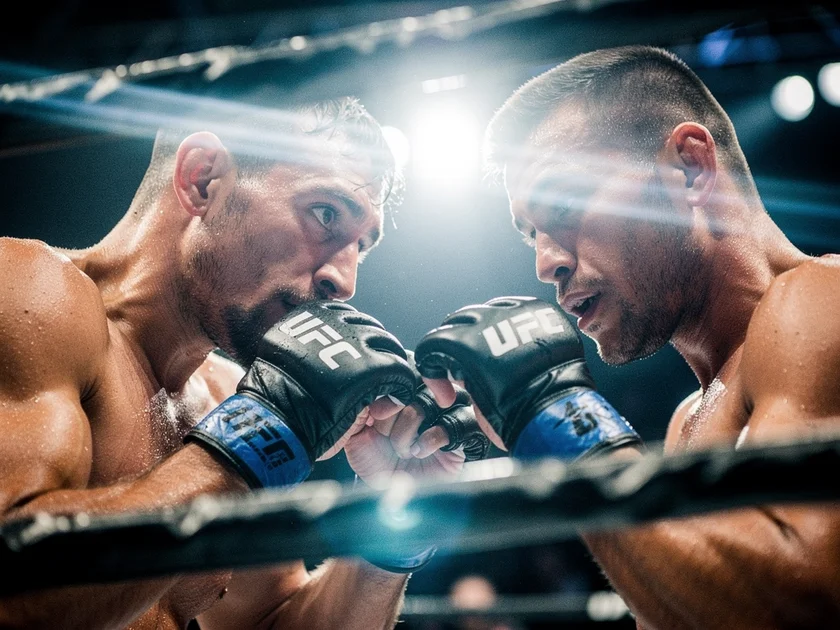
UFC drug testing USADA protocols represent the most structurally ambitious anti-doping program in professional combat sports — and one of the most contested. Since the UFC partnered with the United States Anti-Doping Agency in 2015, the program has generated suspensions across every weight class, sparked legal challenges, and exposed persistent tensions between enforcement rigidity and athlete fairness.
How UFC Drug Testing USADA Was Built
The UFC-USADA partnership launched in July 2015, replacing a fragmented state athletic commission model with a unified, year-round program. USADA introduced out-of-competition testing, the Whereabouts Program requiring fighters to submit daily location data, and the World Anti-Doping Agency (WADA) Prohibited List as the enforcement standard.
Before 2015, UFC fighters were tested primarily on fight night — a window easily gamed by athletes who understood detection timelines. Year-round, unannounced testing fundamentally changed the risk calculus for fighters considering performance-enhancing drug use. Blood and urine samples went to WADA-accredited laboratories for analysis.
The Whereabouts Program proved particularly significant. Fighters in the testing pool must submit their location for a one-hour window each day, enabling no-notice tests at training camps, gyms, and private residences. Missing three tests within a 12-month period — a whereabouts failure — constitutes an anti-doping rule violation independent of any positive result.
What the Suspension Record Reveals
Violations across the UFC-USADA era have touched every competitive tier, from regional prospects to former world champions. Prohibited substances detected have ranged from anabolic steroids and peptide hormones to diuretics used as masking agents — a breadth reflecting the diversity of enhancement strategies in combat sports.
Weight Class Patterns and Supplement Defenses
No single division carries unique implication, though extreme weight cuts — common from flyweight through welterweight — have historically linked to diuretic and masking agent use in combat sports research.
Contaminated supplement claims rank as the most frequently cited defense in anti-doping hearings. USADA and WADA operate under strict liability: a fighter bears responsibility for any banned substance found in their system, regardless of origin. Successful contamination defenses can reduce the standard two-year sanction, but the burden of proof is substantial. Fighters with access to legal and scientific resources build stronger documented cases than those without equivalent support — a disparity that critics identify as a structural fairness problem.
The WADA Prohibited List and Annual Updates
The WADA Prohibited List updates annually, meaning substances can be added between the time a fighter begins using a compound and the date of a test. Meldonium, a cardiac drug added to the list in January 2016, generated positive tests across multiple sports because athletes misjudged how long it remained detectable after the ban took effect.
UFC fighters must track list changes continuously. That compliance burden falls unevenly on athletes with different access to sports medicine professionals and legal counsel.
Where the Model Faces Criticism
The UFC-USADA framework draws substantive criticism on procedural fairness grounds — not only from fighters seeking to avoid accountability, but from sports law scholars who have examined how strict liability interacts with the economic realities of professional fighting.
Whereabouts Burden and Testing Frequency
Fighters who travel internationally for training camps, compete infrequently, or lack consistent legal guidance face a compliance infrastructure built around full-time professional schedules. Whereabouts failures carry the same sanction weight as positive tests under certain conditions, penalizing administrative errors rather than prohibited substance use.
A second criticism targets testing frequency disparities. Higher-profile fighters in title contention have not always received proportionally more tests than lower-ranked athletes — a gap that undermines deterrence, since pressure should be greatest where competitive stakes are highest.
The counterargument is direct: a subjective intent-based system would require investigators to assess the mental state of every fighter who returns a positive result across a global roster. Strict liability trades individual fairness at the margins for systemic enforceability — a trade-off anti-doping authorities have consistently defended as the only workable standard at scale.
The Transition to Third-Party Administration in 2023
In 2023, the UFC moved its anti-doping administration from USADA to Drug Free Sport International (DFSI), a separate third-party organization. The WADA Prohibited List and core testing protocols stayed in place, but the adjudication structure changed. The transition sparked debate about whether the new framework preserved equivalent independence from the UFC’s commercial interests.
Independence is not a procedural formality — it is the foundation of credibility for any anti-doping program. USADA’s original value to the partnership came from its standing as the U.S. Olympic anti-doping authority, operating under federal oversight. DFSI, a legitimate testing organization, carries a different institutional profile. How athletic commissions and international regulators assess that gap will determine the weight suspension decisions carry going forward.
UFC drug testing USADA history demonstrates that building a credible anti-doping program in professional MMA requires more than testing infrastructure. Procedural transparency, consistent enforcement, and verifiable institutional independence are the factors that fighters, regulators, and the public use to judge whether a program protects competition integrity or performs it.
How does UFC drug testing work under USADA?
UFC drug testing under USADA operated as a year-round, out-of-competition program from 2015 to 2023. Fighters in the testing pool submitted daily Whereabouts data so officers could conduct unannounced tests at any location. Blood and urine samples were analyzed at WADA-accredited laboratories against the WADA Prohibited List. Violations carried a standard two-year suspension, reducible in cases of documented contamination or other mitigating factors under the WADA Code.
What substances are banned under UFC anti-doping rules?
UFC anti-doping rules follow the WADA Prohibited List, which bans anabolic steroids, peptide hormones, growth factors, beta-2 agonists, hormone modulators, diuretics, masking agents, stimulants, narcotics, cannabinoids in competition, and glucocorticoids in competition. The list updates annually, and fighters bear responsibility for monitoring changes. Therapeutic use exemptions allow use of specific prohibited substances for documented medical conditions, subject to independent medical review.
Why did UFC switch from USADA to a different anti-doping administrator?
The UFC moved its anti-doping administration to Drug Free Sport International in 2023, citing operational and structural reasons. Critics raised concerns about whether the new body carried equivalent institutional independence from UFC’s commercial interests compared to USADA, which operates under federal oversight as the U.S. Olympic anti-doping authority. The underlying WADA Prohibited List and testing protocols remained in place under the new administration.