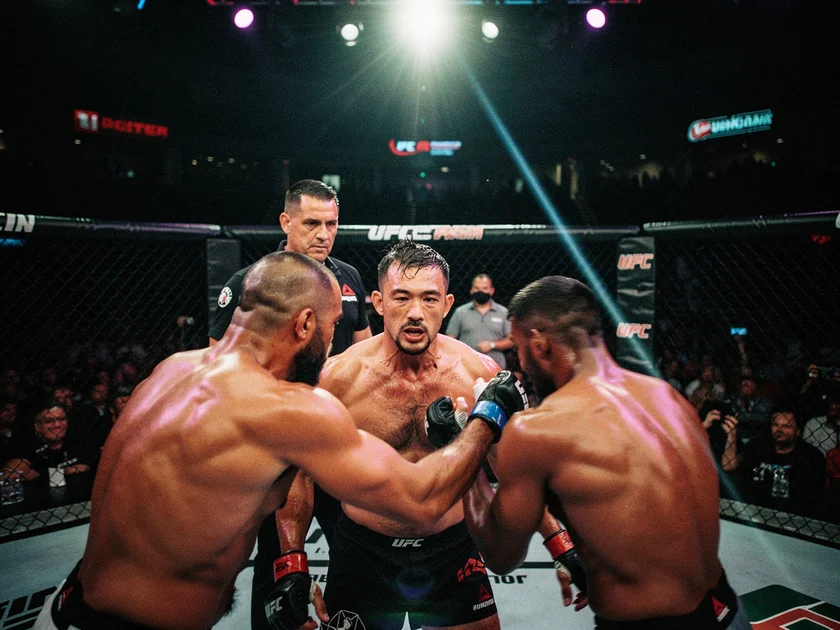
Dricus du Plessis enters the back half of 2026 as the UFC middleweight champion with no confirmed opponent and a division that is quietly stacking credible challengers around him. The South African champion, who stopped Sean Strickland by decision in January 2024 and then submitted Israel Adesanya at UFC 305 in August 2024, has not competed since and the promotional machinery is now pointing toward a return. March 29, 2026, saw UFC Seattle deliver a card headlined by fresh contender performances that will inevitably shape the 185-pound rankings picture.
Joe Pyfer delivered a post-fight Octagon interview at UFC Seattle that underscored his intent to climb the middleweight ladder. Pyfer, a hard-hitting New Jersey native who trains out of American Top Team, has been vocal about targeting the title picture. His presence on the Seattle card, alongside a roster of fighters from multiple weight classes, signals that the UFC is actively building the next wave of 185-pound contenders who will eventually force du Plessis’s hand on a defense date.
Breaking down the advanced metrics on du Plessis’s title reign reveals a champion who wins through relentless forward pressure, above-average takedown defense, and a chin that has absorbed significant shots without folding. His 90-inch reach and 6-foot-2 frame give him structural advantages at middleweight, and his ground-and-pound output during the Adesanya submission finish demonstrated fight IQ that goes well beyond raw aggression. The numbers suggest du Plessis is not merely a momentum fighter — he is a technically complete champion at 185 pounds.
UFC Seattle Builds the Contender Queue Around du Plessis
UFC Seattle on March 29, 2026, functioned as a live audition for the fighters hoping to land a title shot at the middleweight champion. Joe Pyfer’s Octagon interview after his performance confirmed he views himself as a legitimate contender, and the card also featured Alexa Grasso, Michael Chiesa, Terrance McKinney, and Lerryan Douglas across multiple divisions — a reminder of how the UFC uses these Fight Night cards to pressure-test ranked fighters.
Pyfer’s trajectory is worth tracking in the context of the 185-pound title picture. He has demonstrated knockout power that is genuinely rare at middleweight, finishing opponents with both head kicks and short punching combinations. His cardio over three rounds has improved measurably since his early UFC appearances, and his octagon control — the ability to dictate cage position and force opponents into reactive stances — has sharpened. Whether his takedown defense holds up against a wrestler of du Plessis’s caliber is the legitimate technical question that scouts and corner teams will examine on film.
Dricus du Plessis has not publicly named Pyfer as a preferred opponent, but the UFC’s booking pattern since 2023 suggests the promotion rewards fighters who perform on Fight Night cards with accelerated ranking movement. Based on available data from UFC’s official rankings history, a standout Seattle performance can vault a middleweight contender two or three spots in a single cycle — enough to put Pyfer inside the top five and directly in the champion’s orbit.
What Does the Middleweight Division Look Like Right Now?
The UFC middleweight division in early 2026 is a legitimate logjam of dangerous fighters, each carrying a different stylistic threat for du Plessis. Sean Strickland remains ranked after their rematch cycle. Israel Adesanya, the two-time former champion, has not formally retired and continues to represent a potential trilogy. Robert Whittaker, the durable Australian veteran, has stayed active and relevant. Below them, Pyfer and a cluster of hard-charging contenders are pushing upward through the rankings.
The film shows a division that splits roughly into two threat profiles for the champion. Wrestlers and grapplers — fighters who can neutralize du Plessis’s forward pressure with takedowns and cage work — represent one lane of attack. Strikers with volume and reach, who can make the champion pay for his aggressive entries, represent the other. Du Plessis has shown the ability to handle both profiles, but no champion absorbs that level of sustained pressure indefinitely without a defense date arriving at some cost.
Alexa Grasso’s appearance at UFC Seattle as a post-fight interview subject is a separate storyline, but her presence on the card reflects the UFC’s broader strategy of stacking Fight Night events with ranked fighters across multiple weight classes to generate ranking movement and build toward PPV title fights. That same logic applies directly to the middleweight division and to whoever emerges from the Seattle card with enough momentum to demand a meeting with du Plessis.
Key Developments From UFC Seattle and the Title Picture
- Joe Pyfer gave a post-fight Octagon interview at UFC Seattle on March 29, 2026, signaling continued intent to pursue the middleweight title picture.
- Alexa Grasso, Michael Chiesa, Terrance McKinney, Lerryan Douglas, and Yousri Belgaroui all delivered post-fight interviews at UFC Seattle, indicating a multi-division card with significant ranking implications across weight classes.
- UFC Seattle’s Fight Night format — historically used to build contenders ahead of PPV title bouts — positions the card’s winners for accelerated ranking movement in the 185-pound and adjacent divisions.
- Terrance McKinney’s presence at UFC Seattle adds a lightweight wildcard to the evening’s results, but McKinney has previously campaigned at 155 pounds and his performance data does not cross into the middleweight title conversation.
- The UFC’s practice of broadcasting multiple Octagon interviews from a single card, as seen at Seattle with at least six fighters listed, reflects a content strategy designed to maximize fighter visibility and fan engagement ahead of future booking cycles.
What Comes Next for the UFC Middleweight Champion?
Dricus du Plessis‘s next title defense will be shaped by three variables: the UFC’s PPV schedule for mid-to-late 2026, the ranking movement generated by cards like UFC Seattle, and whether any top-five middleweight forces the promotion’s hand with a dominant performance. The numbers suggest du Plessis has been inactive long enough that the UFC will want a defense booked before the calendar turns to 2027 — a roughly 18-month gap between title fights begins to create promotional pressure regardless of how dominant the champion has been.
From a technical standpoint, du Plessis’s most dangerous upcoming matchup on paper is a fighter who combines elite wrestling with the chin and cardio to survive into the championship rounds. His submission of Adesanya demonstrated that “Stillknocks” — the nickname du Plessis carries from his South African combat sports background — can finish fights on the ground as effectively as he can standing. An opponent who neutralizes that ground threat while bringing credible striking volume would present the most complete challenge to his reign.
Based on available data from UFC Seattle’s fight card structure, the promotion is actively developing the next tier of contenders across multiple weight classes. For du Plessis, that means the queue is filling. A return date before the end of 2026 appears probable, though the specific opponent and venue remain unconfirmed as of this writing.
Who is Dricus du Plessis scheduled to fight next?
As of March 29, 2026, no official opponent has been confirmed for Dricus du Plessis’s next UFC middleweight title defense. The South African champion last competed at UFC 305 in August 2024, when he submitted Israel Adesanya in Perth, Australia. The UFC is expected to announce a defense date before the end of 2026 based on the promotion’s standard championship timeline.
How did Dricus du Plessis win the UFC middleweight title?
Du Plessis captured the UFC middleweight championship by defeating Sean Strickland via unanimous decision at UFC 297 in Toronto in January 2024. He then made his first successful defense at UFC 305 in Perth, Australia, submitting former two-time champion Israel Adesanya in the fifth round — a finish that reinforced his credentials as a complete mixed martial artist rather than a one-dimensional striker.
Is Joe Pyfer a legitimate contender for the UFC middleweight title?
Joe Pyfer has established himself as a genuine threat in the UFC middleweight division through a series of finishing performances. His post-fight interview at UFC Seattle on March 29, 2026 reflected continued confidence in his title aspirations. Pyfer’s combination of knockout power and improving ground game makes him a credible top-10 fighter, though a win over a ranked top-five opponent would be needed to secure a title shot against du Plessis.
What is Dricus du Plessis’s fighting style?
Du Plessis is a pressure-forward mixed martial artist with a background in kickboxing and submission grappling. He uses forward movement and volume striking to break opponents’ rhythm, then transitions to ground-and-pound or submission attempts when fights hit the mat. His 90-inch reach and strong takedown defense allow him to dictate range, while his fight IQ — demonstrated across his UFC run — lets him adapt mid-fight when opponents adjust their game plans.
Who are the top contenders for the UFC middleweight title in 2026?
The UFC middleweight division in 2026 features Sean Strickland, Israel Adesanya, Robert Whittaker, and Joe Pyfer among the most prominent contenders for du Plessis’s title. Strickland and Adesanya both carry prior championship pedigree at 185 pounds, while Whittaker has remained consistently active and ranked. Pyfer represents the new generation pushing upward through the division, with UFC Seattle on March 29, 2026 serving as a platform for his continued ascent.