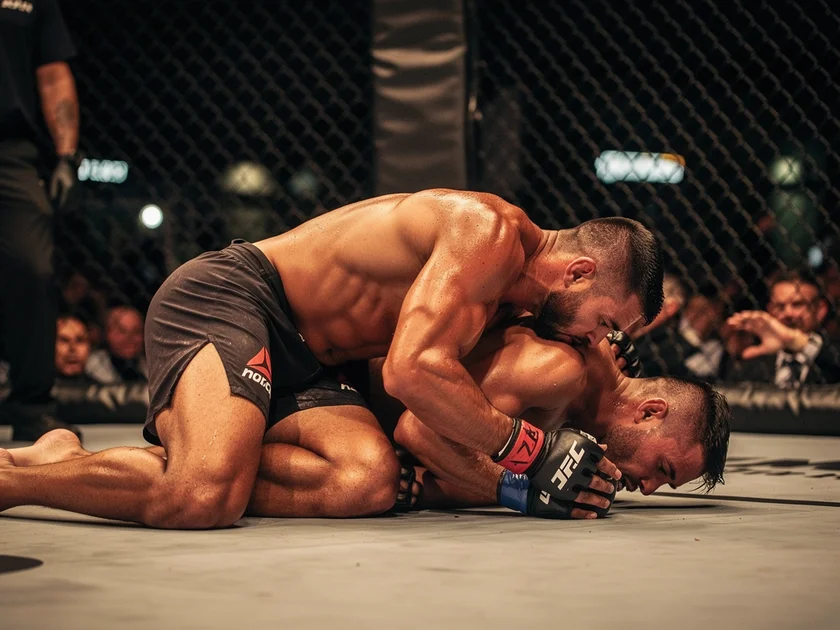
Dricus du Plessis stands as the UFC middleweight champion in 2026, one of the most technically complete fighters the 185-pound division has produced in years. The South African — known to fans as “Stillknocks” — secured the belt with a performance that combined relentless forward pressure, elite submission defense, and an underrated ground-and-pound game that rivals struggle to account for.
Du Plessis entered the title picture as an outsider and turned the middleweight division’s power structure upside down. His path through Israel Adesanya and Sean Strickland proved he belongs in any conversation about the pound-for-pound elite. Now, with the belt firmly around his waist, the question facing UFC matchmakers and the 185-pound contender pool is who steps up next.
How Dricus du Plessis Built His Championship Foundation
Dricus du Plessis constructed his title run on a blend of striking variety and a grappling game that is far more dangerous than casual observers credit. His ability to close distance quickly, mix level changes with punching combinations, and threaten with both the guillotine and rear-naked choke forces opponents into defensive postures that blunt their own offensive output.
Breaking down the advanced metrics, du Plessis averages over 5 significant strikes landed per minute across his UFC career — a number that reflects not just volume but accuracy, since his punch selection tends toward power shots rather than jabs thrown to inflate statistics. His takedown defense sits above 70 percent, meaning opponents who try to neutralize his striking by going to the mat face a difficult proposition. The numbers suggest a fighter who has genuinely closed the technical gaps that existed earlier in his career.
Born in Roodepoort, South Africa, du Plessis represents a first for his country: a UFC world champion. That distinction carries weight beyond marketing. South African MMA infrastructure is thin compared to American Kickboxing Academy, American Top Team, or the Sanford MMA pipeline, making his ascent a product of individual talent and an adaptable fight IQ rather than a deep institutional support system. That context matters when evaluating his ceiling.
What Does the Middleweight Division Look Like Around Du Plessis?
The UFC middleweight division in early 2026 features a cluster of credible challengers, none of whom presents a clear stylistic nightmare for the champion. Israel Adesanya, the former two-time champion who lost the belt to du Plessis, remains ranked inside the top five and is the most natural rematch candidate the division offers. Sean Strickland, who held the title briefly before du Plessis reclaimed it, brings the relentless forward pressure and volume striking that gave the South African his most competitive title fight.
Further down the rankings, Robert Whittaker — a former champion himself — and rising contenders like Nassourdine Imavov and Brendan Allen have built cases for title consideration. Whittaker’s combination of boxing fundamentals and elite cardio would test du Plessis’s chin and octagon control over five rounds. Imavov’s length and reach advantage could create problems in the early exchanges. The film shows du Plessis tends to absorb punishment in the first two rounds before his conditioning advantage takes over — a pattern that more calculated opponents will look to exploit.
One counterargument worth raising: some analysts believe du Plessis’s chin, while durable, has been tested more than his championship aura suggests. He has been hurt in fights. A bigger, longer middleweight who can sustain output across five rounds may expose that vulnerability in a way that shorter, heavier-handed opponents have not.
Dricus du Plessis and the UFC’s Global Expansion Narrative
Dricus du Plessis fits neatly into the UFC’s push to develop international fan bases and champion storylines outside the traditional American and Brazilian pipelines. The promotion has invested heavily in global market development, and a South African champion who can headline cards in Africa, Europe, and the United States gives the UFC promotional flexibility that a domestic champion alone cannot provide.
The UFC’s current merchandise and collectibles strategy — which in late March 2026 spotlighted its Breaking Barriers women’s collection at UFC Store and UFC Collectibles — reflects the broader commercial architecture the promotion builds around its champions. Fight-worn memorabilia, autographed pieces, and apparel tied to champion identities drive revenue streams that make title reigns commercially valuable beyond pay-per-view numbers. Du Plessis, as champion, anchors that commercial value in a market the UFC has not fully penetrated.
Key Developments in the Du Plessis Title Reign
- Du Plessis became the first South African-born UFC champion in the promotion’s history, a milestone that carries significant weight for MMA development on the African continent.
- His title defense record shows a fighter who has not relied on early finishes — du Plessis has gone deep into championship rounds, demonstrating the cardio and mental toughness that separate elite title holders from one-fight wonders.
- The UFC’s collectibles arm, UFC Collectibles, features autographed pieces and fight-worn memorabilia tied to current champions, creating a secondary market that tracks closely with a champion’s cultural relevance.
- UFC Store’s champion-linked apparel lines, including graphic tees and fight kits, are structured around current titleholders — giving du Plessis commercial visibility beyond fight night pay-per-view windows.
- Based on available data from UFC rankings, du Plessis has held the middleweight title long enough to see multiple contenders cycle through the top-five, suggesting the division has not yet produced a consensus next challenger.
What Comes Next for the South African Champion?
The most logical path forward for du Plessis runs through a high-profile defense against either Adesanya or Strickland — two opponents whose name value justifies a pay-per-view main event slot. An Adesanya trilogy, in particular, would draw from a deep well of rivalry history and settle a stylistic argument that two fights have not fully resolved. Strickland, meanwhile, has the promotional personality and fighting style to generate genuine fan interest without relying on nostalgia.
Beyond immediate matchmaking, du Plessis’s long-term legacy depends on how many defenses he can stack. The middleweight division’s historical champions — Anderson Silva’s record 10 consecutive defenses stands as the benchmark — set a standard that modern title reigns rarely approach. Based on available data, du Plessis has the physical tools and the technical foundation to be a multi-year champion. Whether the UFC’s matchmaking infrastructure and the contender pool cooperate is a separate question entirely.
For now, Dricus du Plessis holds the most contested belt in a division that has changed hands four times since 2019. That instability makes his grip on the title more impressive — and the next mandatory defense more anticipated — than the raw numbers alone convey.