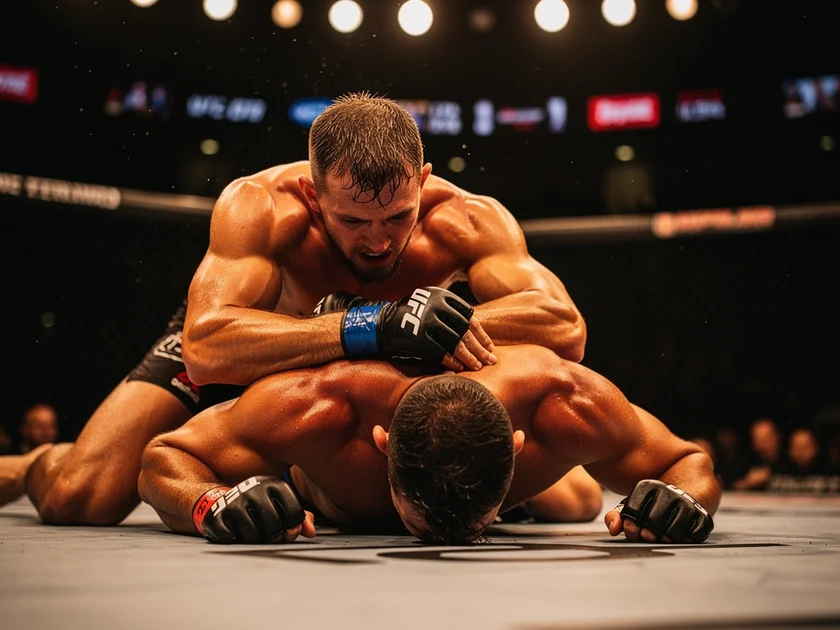
Alexa Grasso delivered a rear-choke submission finish that left Maycee Barber motionless on the canvas in the co-main event of UFC Fight Night in Seattle on Saturday, March 28, 2026. The result carries serious weight for the UFC Women’s Division flyweight rankings, as Barber had been riding a seven-fight win streak and closing in on title contention before the night went sideways at Climate Pledge Arena.
Barber broke her silence Monday, describing the aftermath in stark terms. “I don’t really remember a whole lot,” she wrote in her first public statement following the loss. That post-fight disorientation, after a finish that left her prone on the mat for several moments, gave medical staff genuine cause for concern before clearing her.
How Grasso Dismantled a Top Flyweight Contender
Alexa Grasso controlled this fight with the technical precision that has defined her career across two weight classes. A former UFC strawweight champion who built her reputation on slick submission work and sharp counter-striking, Grasso exploited Barber’s forward pressure to secure the rear choke that ended the contest. The finish was not simply a power move — it was a product of superior fight IQ and octagon control that Grasso has consistently demonstrated against elite competition.
The pattern in Grasso’s game is familiar to anyone who has tracked her closely: she invites pressure, creates angles, and punishes opponents who commit too hard to forward movement. Barber’s aggressive, volume-based style — which fueled that seven-fight run — became a liability the moment Grasso got her back. That mismatch in submission grappling tier, more than any single exchange, explains how the co-main ended.
Climate Pledge Arena in Seattle hosted a stacked UFC Fight Night card that also featured Joe Pyfer’s notable win over Israel Adesanya in the main event. Grasso’s co-main performance, however, may draw more long-term scrutiny from the women’s flyweight rankings picture. Two high-profile finishes on one card is rare; the fact that both came via stoppage made Seattle a memorable night across multiple divisions.
What Barber’s Defeat Means for Flyweight Rankings
Maycee Barber entered UFC Seattle having won seven consecutive bouts, a run that placed her among the most credible next challengers for the 125-pound title. That trajectory is now interrupted, and any title-shot timeline has been pushed back significantly.
Barber’s development arc had been one of the more compelling stories in women’s flyweight over the past two-plus years. After early losses to Jennifer Maia and Roxanne Modafferi, she rebuilt methodically — tightening her wrestling base, improving her boxing combinations, and demonstrating better weight management at 125 pounds. Seven straight wins earned her genuine credibility as a contender, not merely a prospect with upside.
Fighters who suffer submission or knockout losses after extended win streaks typically face a 12-to-18 month recalibration period in UFC rankings. Mandatory medical suspensions combine with the promotional habit of matching recovering fighters against mid-tier opponents before re-elevating them toward title contention. Based on comparable career arcs — Barber’s own earlier restart after losses to Maia and Modafferi is one reference point — the path back requires patience and likely two or three more victories before matchmakers revisit a title conversation.
Barber’s Recovery and the Medical Reality
Maycee Barber’s post-fight statement addressed her physical condition directly and without deflection. The admission that she retained little memory of the immediate aftermath points to a concussive event requiring careful neurological monitoring before any return to training. UFC medical protocol mandates minimum suspension periods following stoppages, with length determined by the ringside physician’s assessment of how the finish unfolded.
“I don’t really remember a whole lot,” Barber stated Monday, two days after the fight. That candor, while concerning, reflects the correct approach. Fighters who minimize post-stoppage symptoms and rush back into full-contact training compound neurological risk in ways that carry consequences well beyond their next bout. The UFC‘s concussion protocol — graduated return-to-activity steps, mandatory rest, physician clearance — exists precisely for finishes like this one.
One distinction the medical staff will weigh: Grasso’s finish was officially ruled a rear choke submission, not a straight knockout. The mechanism of unconsciousness via blood choke differs from blunt-force cranial trauma. Ringside physicians may assess Barber’s suspension timeline differently as a result — though the visual of her lying motionless on the canvas suggests the body’s response was severe regardless of how the record books categorize the finish type.
Key Developments from UFC Seattle’s Co-Main Event
- Grasso secured the rear choke submission in the co-main event slot at Climate Pledge Arena on March 28, 2026 — a marquee venue win that adds to her resume ahead of any title discussion.
- Barber’s first public statement arrived Monday, March 30, roughly 48 hours post-fight, indicating she was well enough to communicate but still processing the physical aftermath.
- Joe Pyfer defeated Israel Adesanya in the main event the same night, meaning UFC Seattle produced two high-profile stoppages across separate weight classes.
- Barber’s record now shows losses to Maia, Modafferi, and Grasso — three technically proficient fighters whose games exposed the same forward-pressure vulnerability at different stages of her career.
- Grasso has now competed across two UFC weight classes — strawweight and flyweight — securing notable wins at both, a cross-division versatility few women in the promotion can claim.
What Comes Next for the 125-Pound Title Picture
Alexa Grasso’s victory at UFC Seattle re-inserts her firmly into the flyweight title conversation. Her ability to secure a rear choke against a physically strong, momentum-carrying opponent like Barber is the kind of technical execution that makes her a credible headliner for any future women’s flyweight title fight. The UFC front office will face decisions about how quickly to book her next appearance and against whom — with Erin Blanchfield and Manon Fiorot among the ranked flyweights who have been building their own cases during Barber’s ascent.
The broader women’s flyweight division now operates with a reshuffled contender queue. Grasso’s win creates separation at the top of the challenger tier, while Barber’s medical recovery timeline opens a window for other ranked fighters to press their claims with the matchmaking office. Division depth means the title picture will not sit idle during a recovery period — the UFC has shown repeatedly that it will slot available contenders into high-profile bouts rather than wait on one fighter’s return.
For context on where the numbers stand: women’s flyweight has produced 14 UFC title fights since the division launched in 2017, averaging roughly two per year. That pace suggests the next championship bout is not far off — and Saturday’s result in Seattle just reshuffled who gets first consideration for that slot.
Frequently Asked Questions
What was the official result of Grasso vs. Barber at UFC Seattle?
Alexa Grasso defeated Maycee Barber by rear choke submission in the co-main event of UFC Fight Night at Climate Pledge Arena in Seattle on March 28, 2026. The finish left Barber motionless on the canvas for several moments before medical staff attended to her.
How long was Maycee Barber’s win streak before the loss to Grasso?
Barber had won seven consecutive UFC bouts before the Seattle defeat. That run had positioned her as one of the top contenders in the women’s flyweight division, with a 125-pound title shot viewed as a realistic near-term outcome prior to March 28.
What did Maycee Barber say after the fight?
Barber posted a public statement on Monday, March 30 — two days after the bout — writing “I don’t really remember a whole lot” about the immediate aftermath of the finish. The statement was her first public communication following the loss and came roughly 48 hours after the event concluded.
Does a rear choke submission carry the same medical suspension as a knockout?
Not automatically. UFC ringside physicians assess each finish individually. Blood choke stoppages — where unconsciousness results from restricted carotid blood flow rather than head trauma — can carry different suspension lengths than traditional knockouts, though the severity of the fighter’s post-fight condition also factors into the physician’s determination.
Who else is in contention for the UFC women’s flyweight title after Seattle?
Erin Blanchfield and Manon Fiorot are among the ranked flyweights who have been active and building cases during Barber’s run. Grasso’s win places her at or near the front of the challenger line, though the UFC matchmaking office has not formally announced a next title fight as of the time of publication.