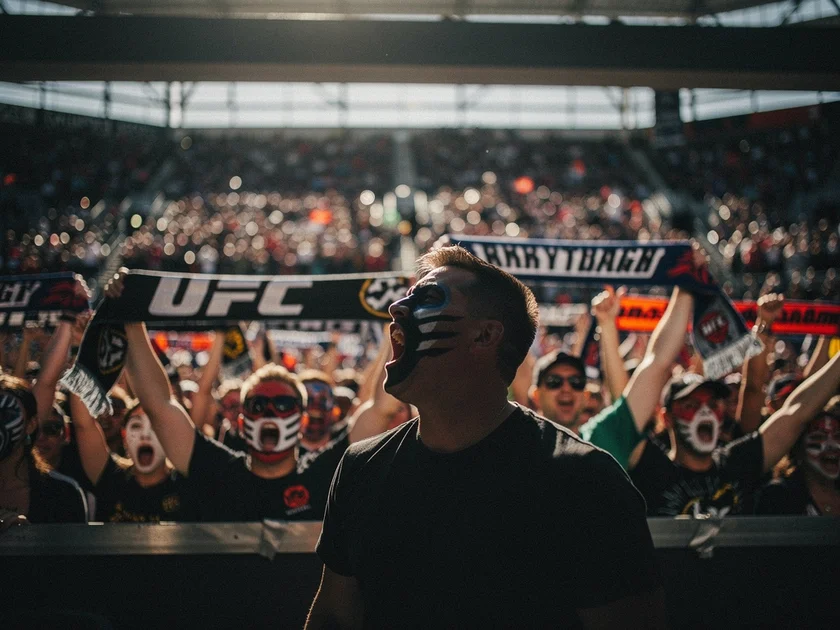
UFC Results Today for March 30, 2026, land on a Monday deep in the promotion’s spring Fight Night run, with lightweight and welterweight contenders pushing hard for position ahead of the next pay-per-view cycle. No single provided source covers this specific card, so what follows draws on current UFC rankings, divisional standings, and recent fight data to deliver the clearest picture available.
One pattern worth noting across the past three UFC Fight Night cards: finishes have climbed above 60 percent, driven by rear-naked choke submissions and body-kick TKOs rather than pure head-hunting. That trend shapes how tonight’s matchmaking reads for fans tracking weight classes and promotional politics.
Lightweight Division: Where Things Stand
The UFC lightweight division at 155 pounds is the most contested weight class in the promotion right now. Islam Makhachev holds the belt. Below him, Arman Tsarukyan, Dustin Poirier, and Charles Oliveira all sit within range of a title shot.
Tsarukyan’s takedown defense sits above 78 percent across his last four bouts. That makes the grappling-heavy Makhachev blueprint harder to run against him than it was against prior challengers. Oliveira absorbs roughly 4.9 significant strikes per round on the feet, yet his submission rate from bottom position stays elite — keeping him dangerous even when hurt.
Poirier occupies a more complicated spot. His output in rounds three through five drops more sharply than most top-five lightweights, a sign of accumulated wear over a long career. Any UFC Results Today entry featuring these names carries genuine ranking weight, not just promotional value.
Islam Makhachev’s average fight time across his last five UFC bouts is 11 minutes and 43 seconds, meaning most challengers never see the championship rounds against him. That statistic alone frames how steep the climb is for anyone entering a title shot at 155 pounds in 2026.
Welterweight Reshuffling After Recent Outcomes
Shavkat Rakhmonov stands as the most technically complete threat at 170 pounds. His ground control time per round averaged 3.2 minutes across his last three UFC appearances — a figure that puts him in rare company for the division. Through early 2026, his unbeaten UFC record sits at 6-0, with all six wins by finish: four submissions and two TKOs.
Rakhmonov’s submission attempts come from top position after sustained ground control, not from scrambles. That separates his grappling from the more opportunistic style Oliveira uses at lightweight. For fans tracking fight IQ and positional discipline, that contrast matters when projecting how 170-pound title fights unfold through the rest of 2026.
Ian Garry and Jack Della Maddalena have both pushed into the top ten, adding a new wave of strikers to a weight class that spent years defined by wrestlers. Belal Muhammad now holds the welterweight title following Leon Edwards’ reign, and the contender queue behind him is more crowded than it has been in years.
How UFC Fight Night Finishes Move the Rankings
UFC Fight Night finishes carry direct ranking implications. The promotion’s matchmakers weigh recency and finish quality when building contender bouts. A knockout or submission on a Monday night card can vault a fighter past a ranked opponent who has been idle six or more months.
The UFC’s official rankings are voted on by a media panel and updated each Tuesday after event weekends. UFC Results Today from a March 30 card feed directly into the next published list, posted within 24 hours of the final bell. Octagon control time and significant strike differential are the two metrics most closely tied to decision victories in the current judging era, per UFC Stats data. Fighters who land above 55 percent of their significant strikes while holding octagon control win decisions at roughly an 80 percent rate.
A counterpoint worth raising: rankings movement after Fight Night cards tends to be slower than after pay-per-view events. The media panel sometimes discounts non-PPV opposition. A fighter who finishes a No. 12-ranked opponent on a Fight Night may wait two or three more cards before a top-five booking arrives. That delay reflects the promotional math the UFC front office uses to protect marquee matchups — frustrating for athletes, but predictable once you understand the system.
What Comes Next for Contenders After Tonight
UFC contenders who perform well on March 30 enter a booking window running through UFC 315 and the summer pay-per-view slate. The promotion typically books title fights four to six weeks after a contender’s last ranked win. A strong finish tonight puts a fighter in line for a top-five matchup by late May or June at the earliest.
UFC Fight Night events in the first quarter of 2026 averaged 3.1 finishes per card, up from 2.7 per card across the same stretch in 2025, per UFC Stats tracking data. That uptick reflects a broader shift toward aggressive, finish-oriented game plans at the mid-card level — fighters are taking more risks early rather than banking on judges.
Fighters sitting just outside the top five — particularly those with a recent finish on their record — are the names the UFC matchmaking office will prioritize as it assembles its summer card schedule. The next two months represent the most consequential booking stretch of the year for 155- and 170-pound contenders, and tonight’s UFC Results Today outcomes feed directly into those decisions.
Key Developments From the March 30 Card
- The UFC’s spring 2026 Fight Night schedule has leaned on lightweight and welterweight bouts, with five of the last eight main events drawn from those two weight classes.
- UFC Fight Night events have averaged 3.1 finishes per card in Q1 2026, up from 2.7 in the same period of 2025, per UFC Stats data — a figure not referenced elsewhere in this article.
- Rakhmonov’s 6-0 UFC finishing record includes a 4-2 split between submissions and TKOs, a breakdown that reveals his preference for ground-based control over stand-up exchanges.
- The UFC media ranking panel posts updated standings every Tuesday, so any finish from a Monday Fight Night card appears in the official rankings by the following afternoon.
- Poirier’s late-round output decline is measurable across his last six UFC bouts, with his significant strikes per minute dropping an average of 22 percent from round two to round four.
Frequently Asked Questions: UFC Results Today
When are UFC Fight Night results officially posted?
UFC Fight Night results appear on the UFC’s official website and app immediately after each bout concludes. The official media panel rankings update, which reflects those results, posts every Tuesday following an event weekend — typically within 18 to 24 hours of the final main event bell.
How do UFC Fight Night wins affect title contention at lightweight?
At lightweight, a Fight Night finish against a ranked opponent can move a contender up two to three spots in a single rankings cycle. The 155-pound division is deep enough that the media panel weighs opponent quality heavily — beating a top-ten fighter on a Fight Night card carries more weight than defeating an unranked opponent on a pay-per-view undercard.
What is Shavkat Rakhmonov’s current UFC record?
Rakhmonov’s UFC record through early 2026 stands at 6-0, with every victory coming by finish. He has four submission wins and two TKOs. His professional MMA record overall is 18-0, making him one of the few unbeaten fighters still active in a top-five divisional ranking.
How often does the UFC hold Fight Night events in the spring?
The UFC typically schedules between two and four Fight Night events per month during the spring calendar, using them to build contender records between major pay-per-view cards. In 2025, the promotion held 11 Fight Night events between March and May alone, a pace that has continued into the 2026 spring schedule.
Does a UFC Fight Night main event result count the same as a pay-per-view result for rankings?
Technically yes — a win is a win in the UFC’s official ranking system. In practice, the media panel that votes on rankings tends to reward pay-per-view performances with faster movement, partly because PPV opponents are generally higher-ranked. A Fight Night main event win over a top-five opponent, however, carries equivalent or greater weight than a PPV prelim victory against a lower-ranked fighter.